
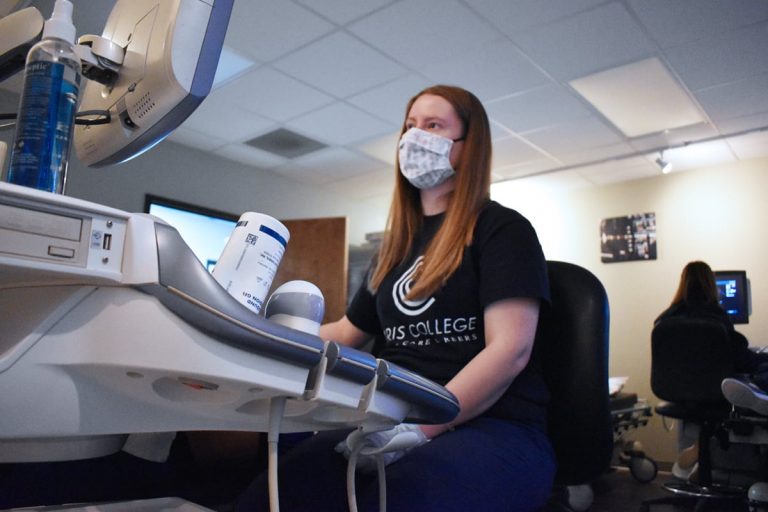
Some people call it “bedside manner.” In the medical world, it’s part of “clinical communication.” Whatever you call it, being able to develop a good rapport with patients is a valuable skill for any healthcare professional. So, what does that look like for sonographers? Keep reading to find out.
The Importance of Communicating with Patients
Many people get anxious about medical appointments and procedures, even routine ones. For some people, undergoing an ultrasound can be especially nerve-wracking because of the “stakes” involved. The results of the procedure might determine a medical diagnosis or the health of a pregnancy.
Good communication from the technician performing the procedure can go a long way towards reducing the anxiety patients feel. The good news is that you don’t need to be an extrovert to handle this aspect of the job. Even if you don’t think of yourself as a “people person,” you can still effectively communicate with patients and help to make them feel more at ease by practicing a few basic principles.
Three Principles of Patient Communication in Sonography Jobs
1. Put yourself in the patient’s place.
Empathy is the most important thing to keep in mind when you’re trying to reduce patient anxiety. To reduce the patient’s fears, you need to understand things from their point of view.
Imagine if your roles were reversed and you were the one having the procedure performed on you instead of the one performing it, but without all the knowledge about ultrasound that you’ve gained from your training and experience. Let that guide what you say to the patient and how you say it.
2. Adapt to the patient.
Although empathy should be at the heart of all your patient communication, you can’t communicate with every patient in the exact same way. There is no single “script” to follow. You obviously shouldn’t talk to an elderly patient in the same way that you would talk to a pediatric patient.
Practice active listening by encouraging the patient to speak up if they experience discomfort and acknowledge their discomfort or anxieties if they do speak up. Let the patient know that they should feel free to ask questions about how the procedure is done and that you’ll be happy to answer them (within professional boundaries).
3. Set proper expectations.
For patients who haven’t had an ultrasound before, it’s important to let them know what they can expect. Talk your way through the procedure, explaining how everything works in simple, non-clinical terms.
It’s inevitable that at some point an anxious patient will ask you for reassurance about what you’re seeing as you perform the procedure. The last thing you want to do is to give the patient wrong expectations, either positive or negative. Without seeming evasive, you should explain to the patient that while you’re trained to perform the ultrasound procedure, interpreting the results should be left to a physician.
Learning the Skills for a Career in Sonography
Achieving the greatest success and job satisfaction as a sonography professional requires both clinical skills and “soft” skills like communication and empathy. At Caris College, our Diagnostic Medical Sonography Associate Degree program can prepare you to enter the field in just 24 months. The program includes a 1,320-hour externship in a real medical facility and job placement assistance.
Our program has a 100% average job placement rate over the past three years. When you pick Caris to train for a job as an Ultrasound Technologist, you can be confident in your choice. Apply today or contact us for more information.
Key Takeaways
Why is patient communication important for ultrasound technicians?
Effective communication helps reduce patient anxiety, builds trust, and makes patients feel more comfortable during ultrasound procedures.
What are the three key principles of patient communication?
Show empathy, adapt communication to each patient’s needs, and clearly explain what to expect during the procedure.
How should ultrasound technicians handle questions about results?
Technicians should explain procedures clearly but leave interpreting ultrasound results and providing diagnoses to physicians.