
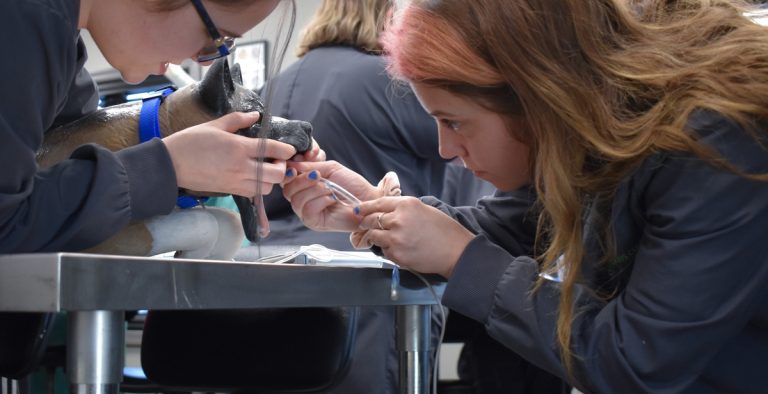
Working in the veterinary field is a great way to incorporate your love for animals into a fulfilling career. Starting as a veterinary assistant often gets your foot in the door without a four-year degree. What are the most important skills that veterinary assistants need to succeed? Keep reading to find out!
Skills Needed for Veterinary Assistant Jobs
Veterinary assistants help veterinarians care for animals, providing key support in ensuring pets’ well-being. As a veterinary assistant, you’ll need to become proficient at:
- Animal handling: Veterinary assistants must handle animals safely, even when they don’t cooperate or are nervous. This requires a deep knowledge of safe, comfortable restraint techniques that can be adjusted based on the individual animal.
- Monitoring and recordkeeping: It’s common to be responsible for ongoing monitoring of vital signs, especially during long stays for illness or injury. Veterinary assistants also must keep records in accordance with regulations and the practice’s standards. This often requires a familiarity with medical terminology.
- Communicating with pet owners: As a veterinary assistant, you communicate frequently with pet owners, often during stressful situations. Veterinary assistants should listen actively, show empathy, and provide clear client education and discharge instructions as directed by the veterinarian.
- Assistance during exams: When vets perform exams, they need a clean, safe space to do so. As the veterinary assistant, you prepare exam rooms, maintain a sterile environment and ensure all necessary supplies are present. You may also assist during the exam itself, aiding in restraining the patient if necessary.
- Lab procedures: Often, veterinary assistants perform basic lab procedures such as sample collection or running tests.
- Medication management: Veterinary assistants may assist with medication administration and dispensing as directed by the veterinarian. They may also provide clients with instructions on administering medications at home.
- Emergency response: Some patients arrive during an acute emergency and may require first aid techniques such as animal CPR.
Success as a veterinary assistant also requires the development of certain soft skills such as:
- Professionalism
- Humility, empathy and a non-judgmental attitude
- Initiative
- Time management
How Do You Become a Veterinary Assistant?
It’s possible to get a veterinary assistant role with just a high school diploma or GED, but it often requires luck or a connection to a veterinarian willing to train you. Most clinics prefer to hire candidates with experience or a certification in the field.
Certification often takes less than a year. You start with a course endorsed by the National Association of Veterinary Technicians in America (NAVTA), and upon completion, you sit for the Approved Veterinary Assistant (AVA) exam. Listing your certification on your resume makes you more competitive and often improves your starting salary.
Enroll in the Caris Vet Assistant Training Program
Caris College offers a 10-month Veterinary Assistant program that prepares you for a fulfilling and successful job in the industry. This NAVTA-approved program is institutionally accredited by the Accrediting Bureau of Health Education Schools (ABHES).
This program uses a hybrid learning environment that includes time in a fully functioning clinical lab and the completion of a 150-hour externship in a companion animal facility. Contact us to learn more.
Key Takeaways
What skills are most important for veterinary assistants?
Veterinary assistants need skills in animal handling, monitoring and recordkeeping, communicating with pet owners, assisting during exams, performing basic lab procedures, managing medications, and responding to emergencies.
What personal qualities help veterinary assistants succeed?
Important soft skills include professionalism, empathy, initiative, humility, a non-judgmental attitude, and strong time management abilities.
How do you become a veterinary assistant?
Most employers prefer candidates who complete a veterinary assistant training program and earn the Approved Veterinary Assistant (AVA) certification, which can often be completed in less than a year.